A “very positive” 2025 thanks to technological innovations, the satisfaction of serving long-standing customers for almost two decades, and challenges overcome in the fields of productivity and quality.
But also a clear-eyed view of the critical issues facing the market – from labour shortages to Italian bureaucracy – and strategies for 2026: commercial expansion in Europe, enhanced customer support and, of course, innovation. Always innovation.
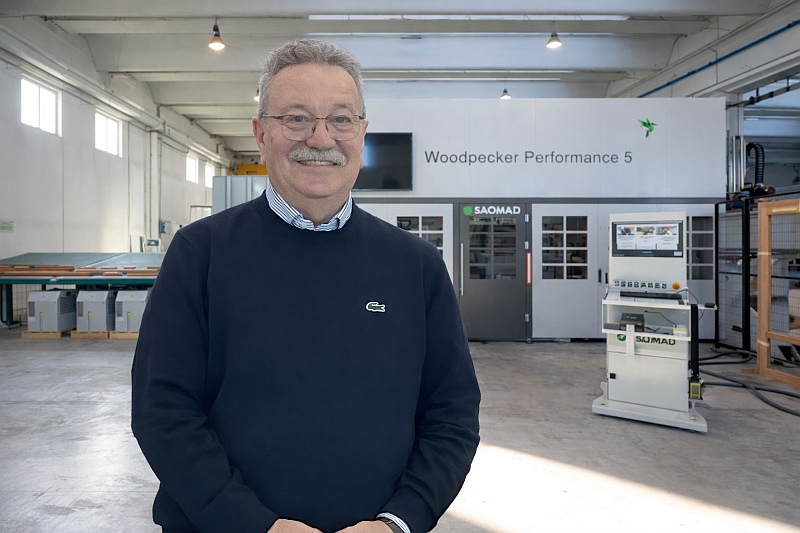
We meet Dario Camporese a few weeks before the end of 2025, a year that has proved to be full of satisfaction and challenges overcome for Saomad. The company continues to stand out for its ability to anticipate the needs of a market undergoing profound transformation.
In this interview, Dario Camporese takes stock of the past year and shares his vision for the future, without hiding some criticism of a country system that is struggling to keep pace with the speed of business.
Mr Camporese, we are at the end of 2025: how would you assess the year that is coming to a close for Saomad?
Thanks to the innovations we have been able to implement, the year has been very positive. The new features we have introduced have allowed us to consolidate our position in the market and respond effectively to the increasingly demanding requests of our customers.
What has been the greatest satisfaction of 2025?
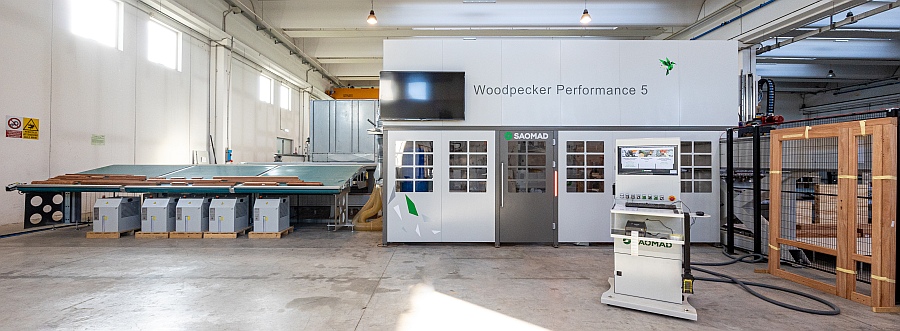
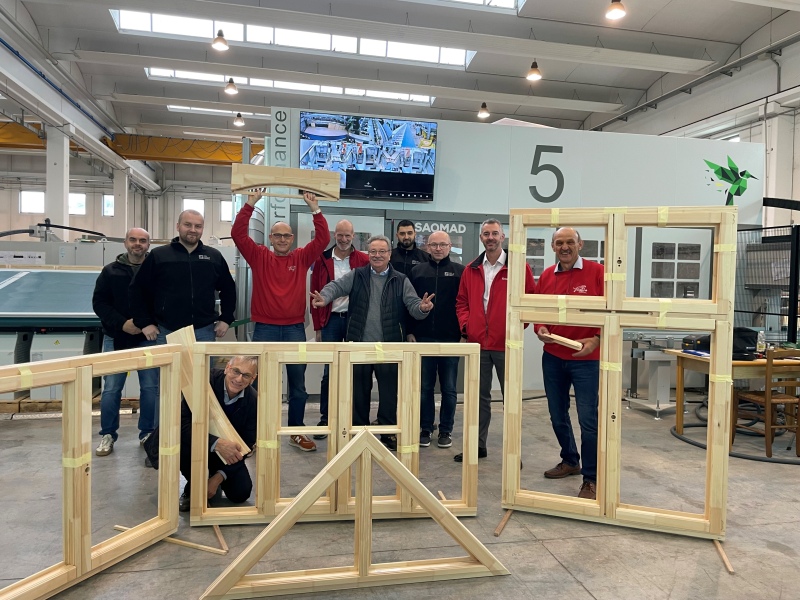
Without a doubt, delivering two Woodpecker Performance 5 machines to one of our long-standing customers who already owned Saomad machining centres, specifically Rotowood machines, for18 years. And he hasn’t stopped using them: they are still there, in operation.
This was my greatest satisfaction, indeed, my pride. Just think: two shifts a day, 8 plus 8 hours, two machines for 18 years. In terms of working hours, that equates to 36 years of use.
Delivering two systems of that magnitude, when we are faced with very fierce competition, means that we have performed well over many years of work and the customer has remained satisfied.
I note that we have a reputation as a manufacturer of highly durable and reliable machines, and this spurs me on to continue along this path..
Was there a particularly challenging challenge you had to face this year?
Yes, one major challenge was with a customer who required us to achieve certain targets in terms of productivity and finishes.
The requirements were very demanding, but I was confident we could do it. In fact, the results we achieved were even better than what the customer had asked for. The customer’s request was to reach 18 metres, and after the first tests we reached 22 metres per minute.
At those speeds, the machine has to react, hold steady and not vibrate, so we can say that it showed what it was made of, even managing to beat the times that had been set for us. It was a really tough challenge, but we won it.
How do you see the wooden window and door market in 2025?
The market has been good in Italy, but it continues to do better abroad than in Italy. This is a trend we have been observing for some time.
Compared to previous years, have you noticed a change in mentality among window and door manufacturers?
Unfortunately, the problems are still the same, including the lack of labour. Staffing is a huge problem almost everywhere.
People in our industry are willing to invest if they can work more independently, without relying too much on staff.
That’s why they want machines that can work on their own for8-10 hours, with large loading and unloading warehouses.
They are forced to hire unskilled staff, but they demand high quality finished products. And in recent years, we have tried to increasingly meet these market demands.
What about the new generations of window and door manufacturers?
Well, here’s a positive note. Thanks to the children who are joining the company, who are more computer literate and more open-minded, there is the drive to innovate. They are smart people who, coming from their father’s school, see a little further ahead and are more courageous in investing in technology. They feel more confident than the older generations.
Are there any other recurring concerns you encounter among window and door manufacturers?
In addition to labour, there is the demand for high quality. They no longer want to handle the pieces several times: they expect our plants to produce components that are ready to go, practically finished and ready for painting. This means recovering labour and optimising processes.
Some time after its launch, how has Woodpecker Performance been received by the market?
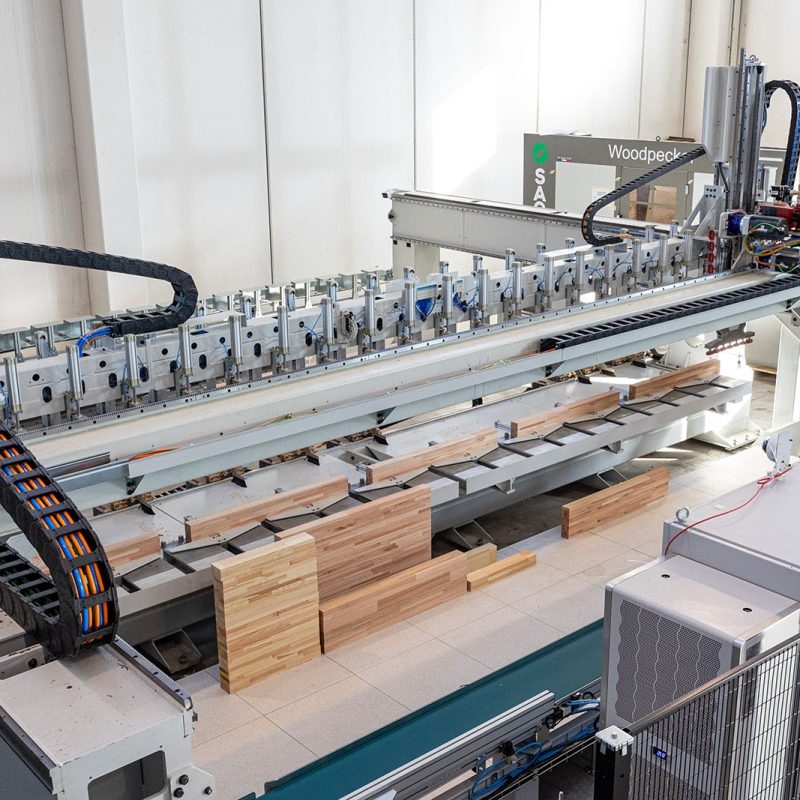
It was an excellent idea and the machine is receiving numerous requests. We are talking about systems intended for large and very large companies, especially abroad, where there are businesses that operate24 hours a day. The machine responds very well to these demands.
What new features did Saomad introduce in 2025?
In addition to Everest and the Picking system, which already existed but which we have further refined, we are pushing more and more towards the robotised factory. The goal is to eliminate manual steps and wasted time: the raw piece enters the machine without ever being touched.
The artificial intelligence we are developing is also part of this process: a supervisor that controls all the cyclical phases within the production lines.
So Saomad no longer just builds machines, but also offers consulting services?
Exactly. We are increasingly focusing on providing technological support to our customers. Large companies are looking for integrated solutions and, thanks to our technicians, we are able to design complete lines with various features and configurations together with the end customer.
Putting various machines in line requires know-how and experience. We come from a long history – think of the corner machines we used to make – and this experience is now recognised. Thanks to our accumulated professionalism, we are able to create complete turnkey systems.
Although you specialise in window and door frames, you have also invested in the timber construction sector with the Kairos machine. What feedback have you had?
It is a new sector for us and we are entering it gradually. Here too, we are recognised for a certain quality and robustness, despite having arrived a little late. However, this year we have sold a couple of machines and we have another one destined for Germany.
I hope that next year we will be able to enter this sector more forcefully. We are investing heavily.
You have published several interviews with customers who have purchased Woodpecker solutions. What common messages emerge?

After months of work, everyone tells me the same thing: the way these machines work is fantastic.
They never imagined that the operator who used to stand in front of the machine now only has to start it up and devote himself to other activities, because precision is guaranteed.
They achieve excellent results in terms of quality and productivity even without constant operator supervision. And the phrase I hear most often is: ‘We wish we had bought it sooner!’
There is another important aspect: with these machines, you don’t need highly specialised personnel. Anyone without special qualifications can operate them.
Many customers tell me that this is precisely why they bought the machine: if a worker resigns, they can hire another one more easily because they don’t need to have specific skills. Before, with manual processing, when you lost a highly skilled person, it was very difficult to replace them.
Has this also opened the doors to large companies?
Yes, another great satisfaction has been entering very large companies that produce 100-150 windows per day. To enter such companies, you have to be technically up to speed on everything: machines, assistance, service.
We have sold systems to very large companies, one in particular produces 450 windows and doors per day with three machines working three shifts. Before choosing us, they scrutinised us thoroughly. It is the second largest company in France, with 20,000 square metres of warehouse space for the machines alone.
If you had a technological magic wand, what feature would you like to install in your machines?
I’m going to throw out a joke, but it’s something I’ve been thinking about for about ten years. It’s very difficult to achieve, almost impossible: the automatic assembly of windows, glass, silicone, handles, everything.
We have a customer in Switzerland who has succeeded in doing this, but they invested huge sums of money and it took them 7-8 months just to calibrate the system. It would be the best, but simpler systems would be needed. I think about it from time to time, but it’s not easy.
What are Saomad’s strategic priorities for the coming year?
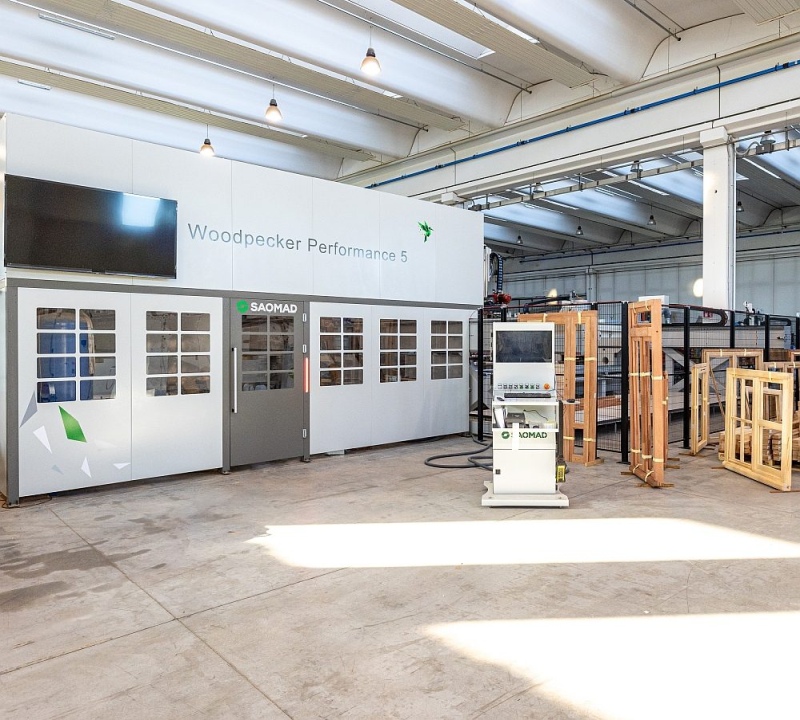
First of all, to expand our sales network to cover European countries where we have not been present until now, such as the Nordic and Baltic countries, where we have already acquired new dealers.
At the same time, we will continue to push for technological innovation. We are working on important new developments, some of which are in the process of being patented, so I prefer not to reveal anything yet.
Finally, services: I have strengthened the support department with new technicians. We want to be faster, quicker and more responsive in supporting our customers.
If you had to give advice to window and door manufacturers who are planning for 2026?
If they want to make money, they should buy Saomad! Joking aside, those who work with old systems do not make money. I have only one piece of advice: innovation, innovation, innovation.
I know it’s a word they hear from everyone, but it’s the truth. Those who innovate stay afloat, earn money, prosper and improve. Those who don’t innovate are content with what little they do.
Is there anything else you would like to add?
Yes, one thing that is close to my heart. In Italy, as abroad, there should be simpler subsidies for the purchase of machinery. State apparatus are not efficient in disbursing funds. People are intimidated by bureaucracy: in Italy, there is a lack of simplicity and speed.
Large companies, with accountants and consultants, are not afraid. But small craftsmen, if you don’t take them by the hand, give up. This is my wish for next year: more simplicity and flexibility on the part of the state. It would be a huge contribution to all sectors, not just ours.
Finally, what message would you like to send to your partners, collaborators, customers and suppliers for 2026?
I hope that everyone will always want to improve, to engage in research and innovation, and to listen carefully to customer requests. And to keep an eye on costs, because competitiveness is essential.
Competitiveness is healthy: it makes us improve and spurs us on to find innovative solutions. Doing things well and making them cost the right amount: this must be the goal. For all of us.