
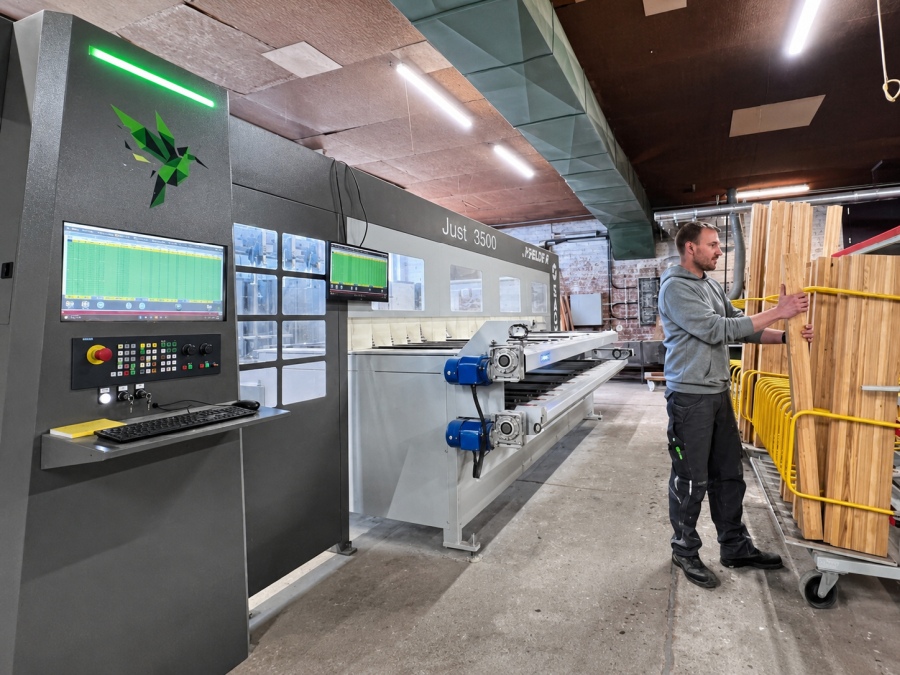
Müller Carpentry in Duderstadt has invested in a modern Saomad by Format 4 Just 3500 CNC machining centre for the complete, automated processing of individual components. In terms of flexibility, quality and performance, the window manufacturer has thus reached a new level.
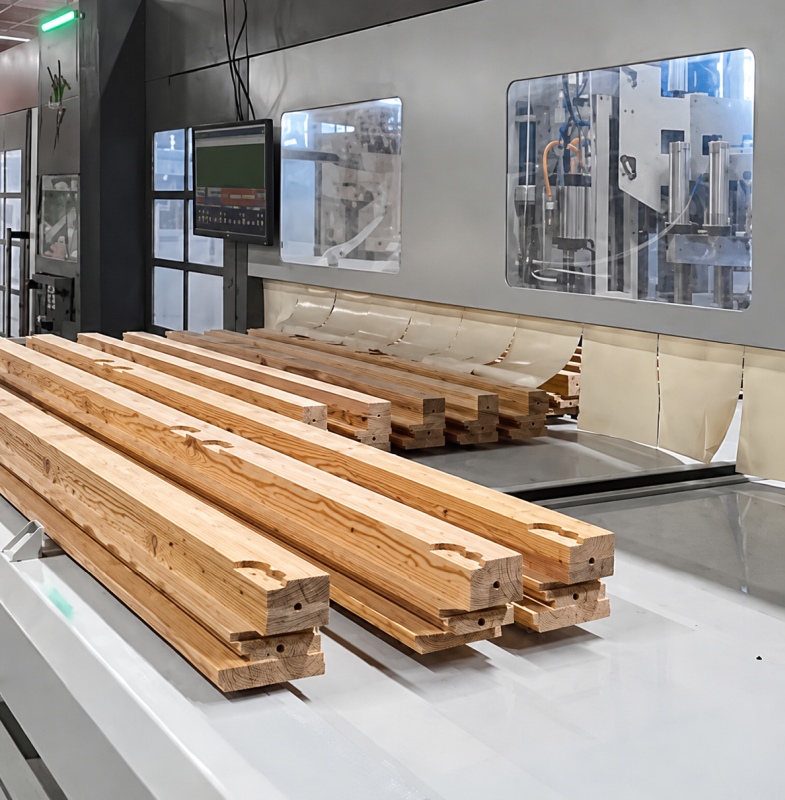
After 25 years, the trusty old corner machine at Müller Joinery in Duderstadt had finally had its day. To prepare for the future, the company invested in a modern CNC machining centre in 2025 for the fully automated machining of individual components. Combined with a new 5-axis CNC machine and a modern automatic chamfering machine, there are virtually no limits in terms of production technology.
With its 46 employees, the company manufactures windows and doors in PVC (its mainstay), timber and timber-aluminium. In addition, Müller offers every conceivable type of accessory: roller shutters, sun and insect screens, security systems, shutters and much more. Installation is carried out exclusively by the company’s own teams. Müller showcases its comprehensive and extensive product range in an extremely attractive and well-designed 600 m² showroom.
In addition to the building components sector, a now rather small proportion of the business is accounted for by the production of bespoke furniture and interior design.
Two generations, one shared goal
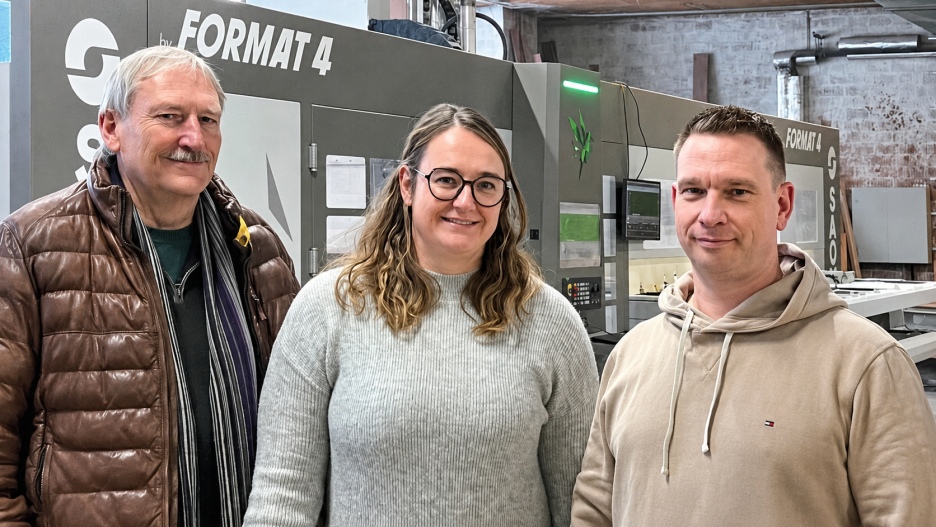
During my visit to the workshop, the owner and managing director Herbert Müller, his daughter Janika Wüstefeld and her husband Thorsten Wüstefeld provided me with some information about their current activities. First and foremost is the production of newly designed wooden windows. Since mid-2025, the technological heart of the operation has been a Just 3500 CNC system from Saomad by Format 4.
Consultancy, sales and planning were carried out in close collaboration with specialists from the Felder Group and the Austrian tool manufacturer Aigner. Herbert Müller highlights the high level of expertise in consultancy, which is primarily solution-oriented.
Alongside the 4-axis window CNC, Müller has also invested in a 5-axis machining centre of the Format4 Profit H350 type. The investment package was rounded off by the Futura P.Max automatic planer and groover, also supplied by the Felder Group.
With this trio of machines, there are virtually no limits when it comes to shapes and finishes, even for the most complex window constructions – a segment in which Müller is primarily active.
Towards greater continuity
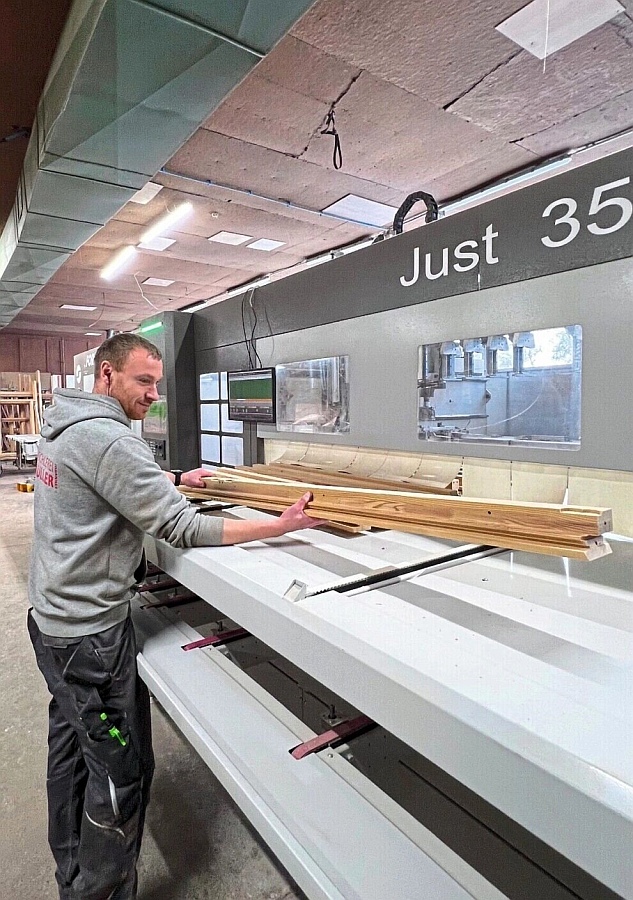
When it comes to software, Müller relies on 3E. For machining on the Saomad CNC, the design data is transferred from 3E to the DDX CAD/CAM system and converted into complete CNC programmes for machining. These are then available on the machine for automated processing.
Window components with rounded, segmented arch or other special shapes are machined on the Format4 Profit H350. Here, the CNC programme is created directly in the Felder CAM software based on the DXF data from 3E.
Plant Manager Thorsten Wüstefeld: “We are on the right track. Timber window production is proceeding with a high degree of data continuity. We are currently working on achieving this continuity in the production of lift-and-slide doors as well.
Another objective is the production of timber-aluminium windows. We are already well on the way with this too and will be collaborating with Gutmann.” When it comes to hardware, the company has relied on its trusted partnership with Maco for 50 years.
Laying the groundwork for the future
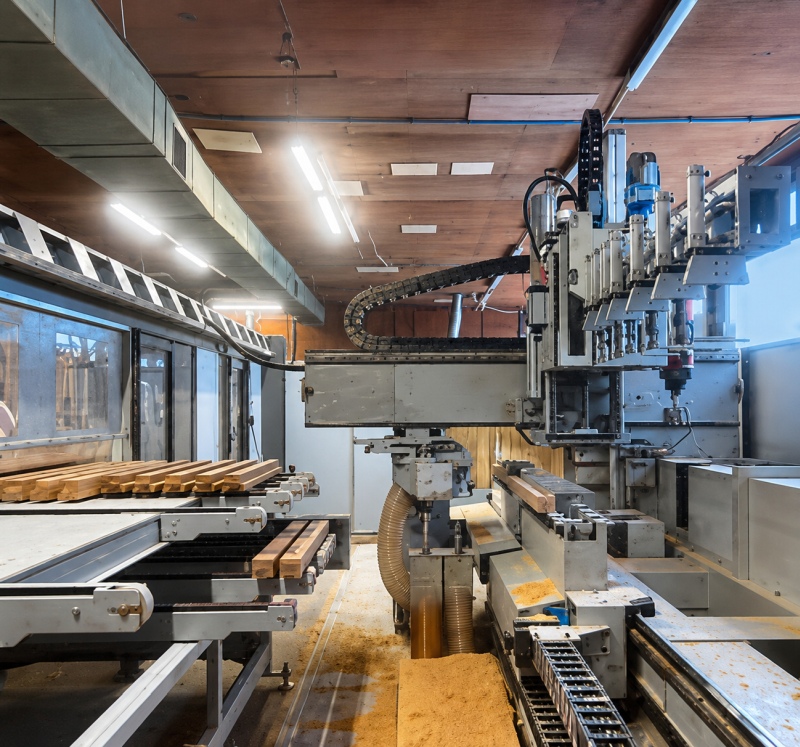
The window manufacturer currently has a production capacity of around 20 window units per shift. The Saomad Just 3500 can operate unmanned for long periods. During this time, the operator can screw the individual pre-machined components together to form the sash and frame.
Ultimately, Herbert Müller, Janika and Thorsten Wüstefeld agree that the window manufacturer has successfully laid the technological foundations. The stated aim is to further and tangibly expand the timber window production sector in the future.
The initial results are promising and show that Duderstadt is on the right track: performance has increased significantly and, more importantly, a new level of flexibility has already been achieved, although there is naturally still room for improvement.
Text/images: Christian Närdemann & Christian Närdemann

