
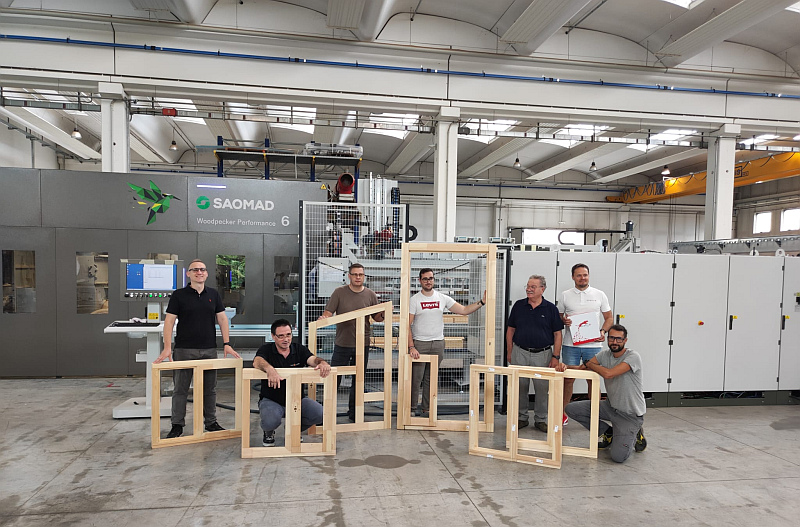
Doleta assessed several manufacturers and visited the joinery workshops that were already working with Saomad. The decision was ultimately based on the machine’s ability to meet their need for high productivity thanks to the Woodpecker Performance 6.
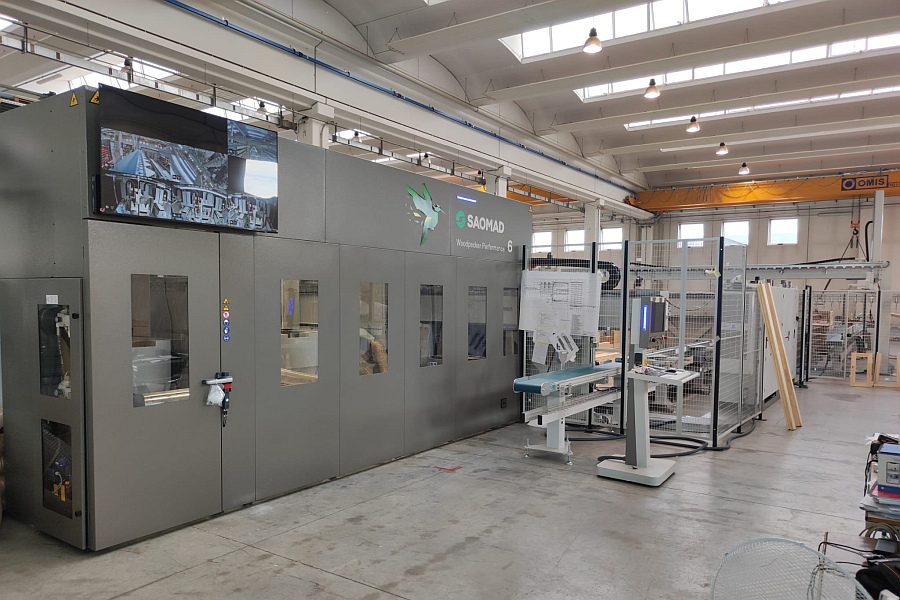
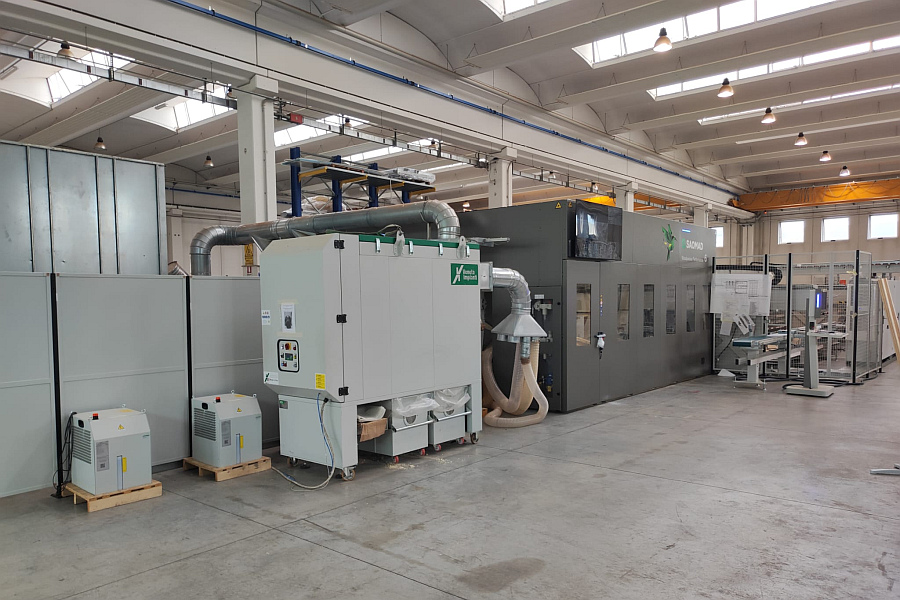
On 1 July, at the Saomad factory, the Woodpecker Performance 6 was already ready for testing. This was no small matter. Martynas Piksrys, Managing Director of Doleta, had expected it to be more of a challenge than his calm tone suggests when he recounts the story.
“Usually, not everything goes to plan. In this case, everything went exactly as we’d agreed.”
He had arrived from Lithuania with a date set weeks earlier, a shared Gantt chart and a preparatory call already under his belt. He found the machine assembled, wired up and ready for testing. Over ninety per cent of the work was complete; all that remained was the customer’s acceptance.
Research comes before the machine
Doleta has been manufacturing windows and doors since 1992. Thirty-four years in business, based in Jieznas, with a sales network spanning Dubai, London, New York, Los Angeles and Tokyo.
Its windows and doors can be found at the Blue Lagoon in Iceland, in residential buildings in Niseko, Japan, and in private homes from New York to Nice.
The company’s positioning is stated in no uncertain terms in its corporate documentation: manufacturer and developer of non-standard products.
Those who work in this way face a specific technological challenge. The bespoke item is not an exception to be dealt with as an emergency; it is the order of the day. And a production line that halts at every variation cannot sustain that model.
The name Saomad was already doing the rounds in Doleta. “We knew it from its history, from our partners.” But when the company began to look around seriously, it had two parallel objectives, and Piksrys keeps them clearly distinct.
The first was to understand the market: what other manufacturers were offering. The second was more demanding: to find someone capable of delivering something that truly belonged to a new era of production.
The first indication regarding Saomad concerned the reliability of its solutions. This is a crucial assessment, which in a sector like this carries more weight than any brochure.
Visits to production sites
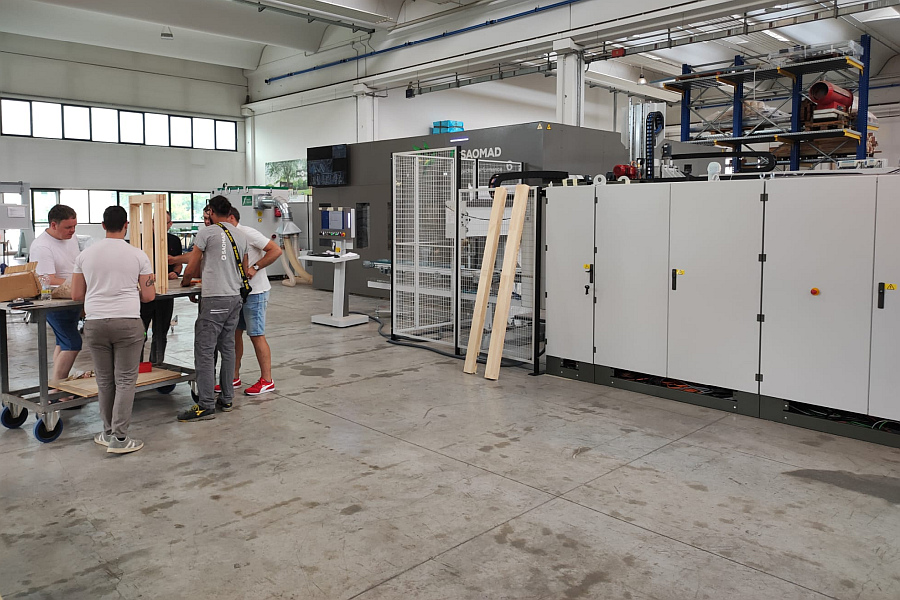
At that point, the selection process took a different turn. Piksrys’s team set off to visit two or three companies that already had Saomad machines installed.
“You don’t make a decision based solely on presentations and what you see on paper.”
Seeing a machining centre in operation provides a different insight from simply reading its specifications. You observe actual cycle times, not theoretical ones.
You see how the operator manages production changeovers and how the machine reacts to various situations.
You speak to those who use it every day, who have no reason to be polite. These visits finalised the shortlist.
The conversation that led to identifying the right machine
“It’s not just about the machine. It’s also about the team, how the people within the company support you, and the level of customer care.”
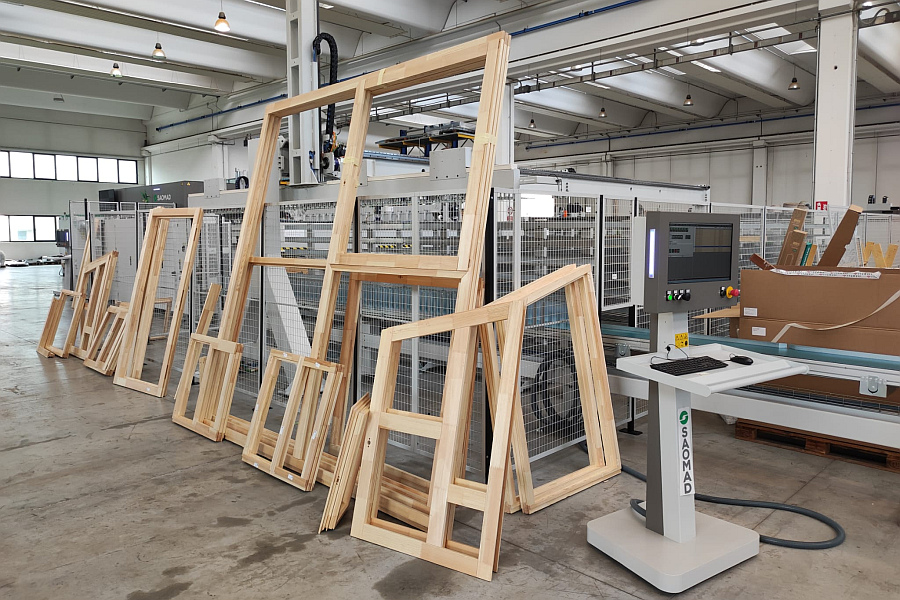
In this case, that focus translated into a project. Doleta outlined its machining requirements, and Saomad compared them with the architecture of the Woodpecker Performance range. From this comparison, it became clear that the six-spindle configuration was the right one.
Piksrys puts it succinctly: “Together with Saomad, we developed the project to achieve maximum productivity whilst maintaining, if not improving, quality.”
On a machining centre for window and door frames, each additional unit means a different distribution of operations throughout the cycle, fewer tool changes, and a different balance between active and idle times.
The negotiations took a long time. The machine resulting from this process comes with a full range of optional extras.
The leap forward
There is a specific industrial rationale behind the investment, and it relates to where Doleta aims to go.
“The company is family-run, has been in business for 34 years, and one of my tasks now is to take it to a new level of automation and a new standard.”
Piksrys ranks the Woodpecker Performance 6 amongst the plant’s most important machining centres, and draws the logical conclusion: “When we install it, we’ll have to upgrade everything else in the system.”
This is the correct line of reasoning, and it is less obvious than it seems. A fast machining centre integrated into a slow production flow does not increase output; it causes bottlenecks. Doleta has already planned the investments that will accompany the machine.
Who was present at the trial run
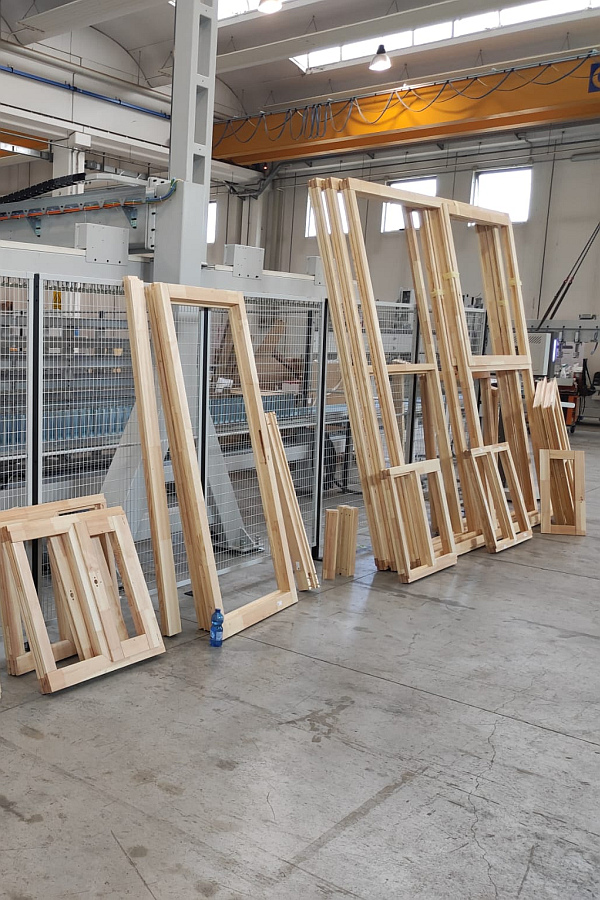
The positive assessment of the initial tests is not just about meeting deadlines. It concerns who was present at the factory whilst the machine was being tested.
Oertli, representing the tooling side, and the software houses DDX and Klaes took part in the trial, with technical coordination provided by Saomad.
Piksrys points to this as the decisive factor: “We have the tool manufacturer and the IT support team here, in the factory, for the acceptance process. I believe this helps a great deal in ensuring everything runs smoothly.”
In a production system that integrates CNC, specialised tools and management software, problems almost always arise at the interfaces between one supplier and another.
Having everyone in the same room whilst the machine is running means resolving these issues as soon as they arise, rather than discovering them three months later during production.
The outstanding issues have been divided between the two phases: some will be resolved before dispatch, others during installation in Lithuania.
What Doleta is asking for now
Regarding the automation of the Piksrys line, he does not have a specific, finalised request. He is seeking expertise.
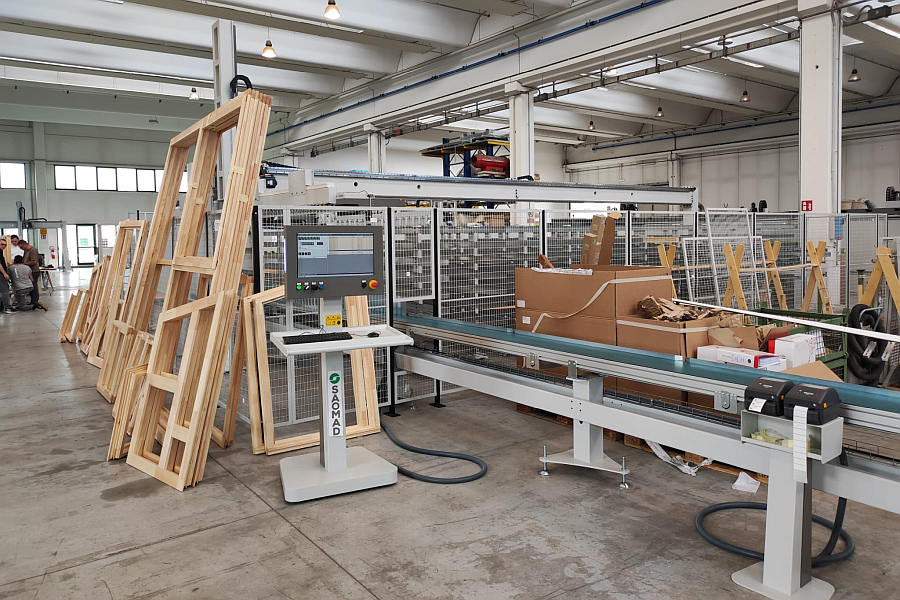
“Given that it’s a new machine and a new brand to work with, we’re waiting for Saomad to recommend best practice.”
And then the sentence that sums up the entire collaboration better than any summary:
“Rather than buying and then forgetting about the relationships, we need your recommendations and to identify best practices.”
The plan involves adding further machines to the Performance 6 line. The layout and automation solutions are currently being finalised with the Saomad technical team.
Which is, after all, how it all began: two companies sitting down to discuss what was really needed, before deciding what to build.

